



BMA names winning bidders for R12bn project to redevelop six ports of entry

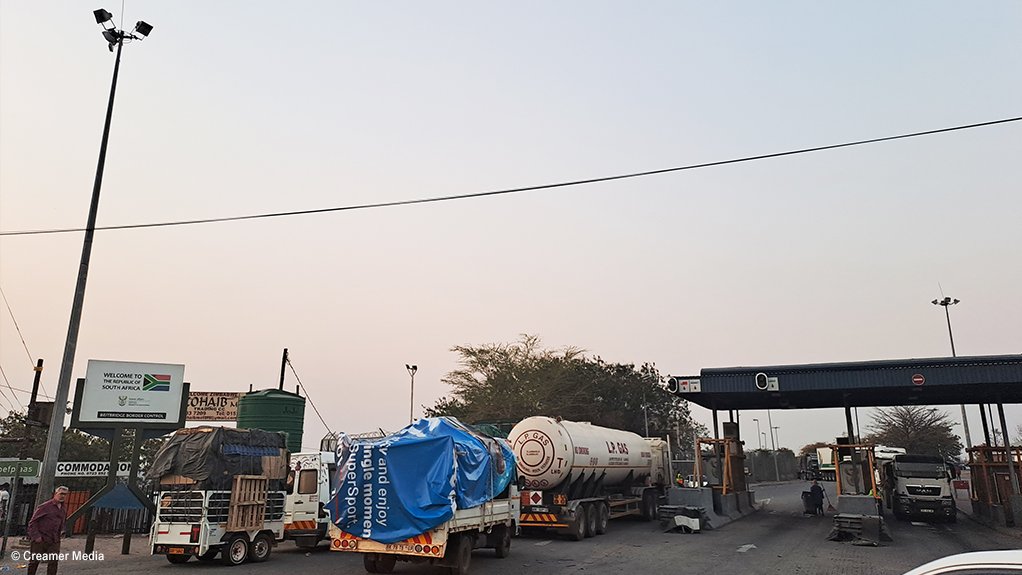


The Border Management Authority (BMA) has announced the winning bidders for the R12-billion redevelopment of its six busiest land border posts, confirming a mix of private sector partnerships that will drive the project.
BMA commissioner and CEO Dr Michael Masiapato highlighted in an April 28 briefing that construction will be undertaken in phased programmes over two to three years.
He also outlined the composition of each of the consortia that succeeded in their bids for this project.
The Baobab Concession, which has been selected for the Beitbridge port of entry, in Limpopo’s Musina local municipality and the Oshoek port of entry, in Mpumalanga, comprises investment companies Yakani Group, Wendra Infraco, Matla Integration, Tau Capital, Navigator Holding and the Baobab Community Trust.
The Raulux Consortium, which comprises Luxus Developments, Raubex, Exhantini Investments, Vulindlela Concessions and Harith General Partners, has been selected for the Lebombo port of entry, in Mpumalanga’s Nkomazi local municipality, with a three-year construction timeline.
The Kgorong Consortium, made up of Motseng Concessions, IDEAS Infrastructure, Crowie Concessions and Thebe Special Purpose Vehicle will deliver the Maseru Bridge port of entry, in the Free State’s Mantsopa local municipality, over two years.
The Kopfontein Consortium, made up of Talis Property Fund, Unik Civil and Construction Engineers and SSG Facilities will undertake the Kopfontein port of entry, in the North West’s Ramotshere Moiloa local municipality.
Lastly, Imbani Consortium, made up of Imbani Projects, Reanga Infra Border Holdings, M&M Capital and Russet Trading & Insvestments, will deliver the Ficksburg Bridge port of entry, in the Free State’s Setsoto local municipality, with both projects expected to take about two years to complete.
Home Affairs Minister Dr Leon Schreiber framed the announcement as part of a broader reform agenda that has been unfolding over the past two years. He said the redevelopment programme is central to transforming South Africa’s immigration and border systems to a modern, efficient and secure ecosystem.
With these projects combined, he said, these crossings account for about 80% of South Africa’s cross-border trade and passenger movement, making them critical to the country’s economic performance and regional connectivity.
For many years, these high-traffic corridors have faced mounting pressures from outdated infrastructure, congestion and fragmented systems, with Schreiber highlighting that these weaknesses have not only slowed down trade but also created opportunities for illegal activities such as illicit trade and undocumented migration.
“The project we launch today, therefore, represents the start of a new era in South African border management. We are moving from fragmented manual processes to integrated digital systems, from duplication and delay to coordination and convenience, from vulnerability to control,” the Minister said.
At the core of the redevelopment is the introduction of “smart border” infrastructure. This includes biometric verification systems, automated processing for travellers and advanced cargo management technologies.
The plan also incorporates the one-stop border post model, which allows neighbouring countries to share facilities and process travellers and goods in a single, integrated space.
Masiapato outlined how the redesigned ports will fundamentally change the flow of traffic across borders, explaining that the current eroding infrastructure was never intended to handle today’s volumes.
“Now, if you look at the manner in which we have to do work today, there’s a lot of traffic that we deal with. At Lebombo, for instance, we have to [process] 1 500 to 2 000 trucks a day, which means that it is completely impossible not to have congestion,” he said.
To address this, the new designs will separate different types of traffic, including cargo trucks, buses, taxis, private vehicles and pedestrians. This restructuring is expected to significantly reduce bottlenecks and improve efficiency.
“So literally, as the Minister said, it is a complete destroying of the current infrastructure and making sure that we have a separated cargo section, separated passenger vehicle section and also a separated area solely for pedestrians,” Masiapato explained.
A key feature of the project is its public-private partnership (PPP) model. The appointed consortia will finance, build and operate the ports for a concession period of up to 25 years before transferring them back to the State.
Government emphasised that no public funds would be used upfront for construction, with private partners to raise capital through commercial banks.
Masiapato noted that the procurement process, which began in 2024, was described as rigorous and transparent, involving multiple government departments and independent advisors.
Authorities confirmed that negotiations with the preferred bidders are at an advanced stage, with construction expected to begin later this year or early next year.
Beyond infrastructure, the redevelopment is closely tied to South Africa’s broader economic ambitions and by improving the efficiency of border crossings, the project aims to lower trade costs, boost exports and position the country as a key gateway for regional commerce.
Research cited during the briefing suggests that even a modest reduction in border clearance times could significantly increase regional intra-African trade.
At the same time, the initiative is expected to strengthen border security, while the integration of digital systems is also intended to close gaps that have historically enabled fraud and revenue losses.
Masiapato noted that the new system will also introduce non-stop processing for compliant cargo through the use of authorised economic operator programmes. Trucks that meet pre-clearance requirements will be able to pass through borders without stopping, thereby significantly reducing delays.
The project has also been closely coordinated with neighbouring countries such as Zimbabwe, which has already upgraded its border infrastructure.
As the programme moves forward, government has committed to ongoing consultations with local communities, businesses and other stakeholders, with Schreiber and Masiapato stressing that transparency and collaboration would be key to ensuring the project’s success.
Article Enquiry
Email Article
Save Article
Feedback
To advertise email advertising@creamermedia.co.za or click here
Research Reports

Projects


Latest Multimedia

Latest News

Showroom

Complete range of security sealing solutions including security seals bags and labels.
VISIT SHOWROOM
Sulzer South Africa, established in 1922, partners with critical industries like power, oil & gas, water, mining, and chemicals to boost...
VISIT SHOWROOM



Announcements
What's On
Subscribe to improve your user experience...
Option 1 (equivalent of R125 a month):
Receive a weekly copy of Creamer Media's Engineering News & Mining Weekly magazine
(print copy for those in South Africa and e-magazine for those outside of South Africa)
Receive daily email newsletters
Access to full search results
Access archive of magazine back copies
Access to Projects in Progress
Access to ONE Research Report of your choice in PDF format
Option 2 (equivalent of R375 a month):
All benefits from Option 1
PLUS
Access to Creamer Media's Research Channel Africa for ALL Research Reports, in PDF format, on various industrial and mining sectors
including Electricity; Water; Energy Transition; Hydrogen; Roads, Rail and Ports; Coal; Gold; Platinum; Battery Metals; etc.
Already a subscriber?
Forgotten your password?
Receive weekly copy of Creamer Media's Engineering News & Mining Weekly magazine (print copy for those in South Africa and e-magazine for those outside of South Africa)
➕
Recieve daily email newsletters
➕
Access to full search results
➕
Access archive of magazine back copies
➕
Access to Projects in Progress
➕
Access to ONE Research Report of your choice in PDF format
RESEARCH CHANNEL AFRICA
R4500 (equivalent of R375 a month)
SUBSCRIBEAll benefits from Option 1
➕
Access to Creamer Media's Research Channel Africa for ALL Research Reports on various industrial and mining sectors, in PDF format, including on:
Electricity
➕
Water
➕
Energy Transition
➕
Hydrogen
➕
Roads, Rail and Ports
➕
Coal
➕
Gold
➕
Platinum
➕
Battery Metals
➕
etc.
Receive all benefits from Option 1 or Option 2 delivered to numerous people at your company
➕
Multiple User names and Passwords for simultaneous log-ins
➕
Intranet integration access to all in your organisation
